The Rifle
The Rifle is the most potent symbol of power and violence in John Steinbeck's The Pearl, representing both Kino's ultimate aspiration and the lethal force that destroys his family. It first appears as the wildest of Kino's daydreams for the future, then materializes as the weapon of his pursuers, and finally becomes the instrument of his son's death and his own violent retribution.
The Rifle as Dream and Aspiration
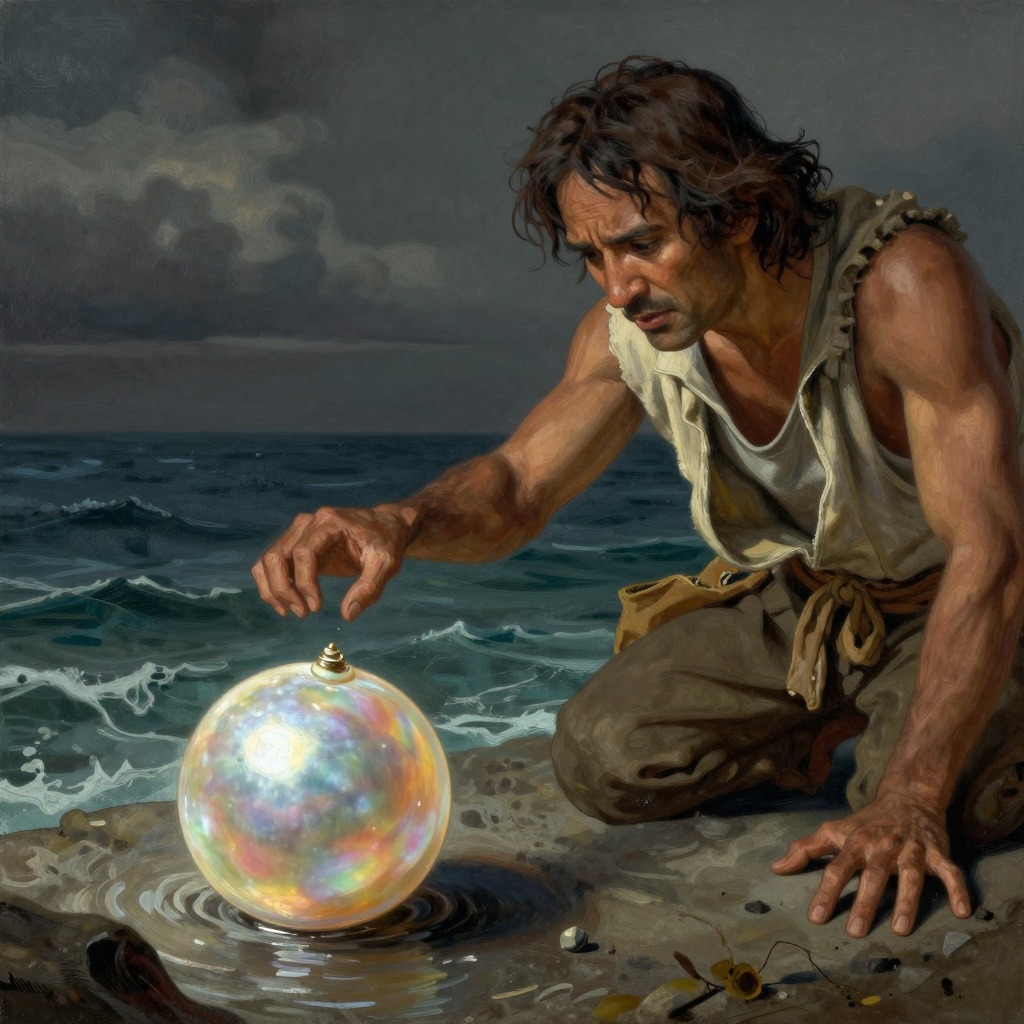
When Kino first gazes into the great pearl and envisions his transformed future, the rifle is the most audacious item on his list. After imagining a harpoon to replace one lost a year ago, his mind makes the leap to a rifle—a Winchester carbine—and he sees himself holding it. The narrator notes that it was the rifle that broke down the barriers: "This was an impossibility, and if he could think of having a rifle whole horizons were burst and he could rush on." The rifle represents not merely a tool but a complete rupture with the known world of poverty and subjugation. When Kino murmurs "A rifle. Perhaps a rifle," the neighbors murmur it back, and Juana looks up with wide eyes at his courage and imagination. The rifle is the threshold object: once Kino can imagine owning it, every other dream—education for Coyotito, a church marriage, new clothes—becomes possible. Yet even as he dreams, the pearl shows him a huddled dark body on the ground with shining blood dripping from its throat, a premonition of the violence the rifle will bring.
The Rifle as Instrument of Pursuit
The rifle enters the story as a real, threatening object when the trackers pursue Kino's family into the mountains. The dark man on horseback carries a rifle that gleams in the sun across his saddle. Kino, lying rigid under a fallen branch, sees the glint of the rifle in the match light and knows that his only chance is to kill the horseman and take the weapon. The rifle is the decisive advantage of the pursuers: it makes them not merely trackers but executioners. Kino understands that the man with the rifle will not take them back alive—his work will come last. The rifle transforms the chase from a hunt into a death sentence.
The Rifle as Instrument of Death and Retribution
In the climactic confrontation at the mountain pool, the rifle becomes the pivot of life and death. Kino strips off his white clothes so his brown skin will not show against the dark night, and he creeps down the smooth rock face like a slow lizard. The watcher on the beach hears a cry from the cave—Coyotito—and cocks the rifle. Kino is in mid-leap when the gun crashes and the barrel-flash makes a picture on his eyes. The great knife swings and crunches hollowly through the watcher's neck, and Kino becomes a terrible machine: he grasps the rifle even as he wrenches free his knife, whirls and strikes the head of the seated man like a melon, then deliberately throws the lever of the rifle, raises it, and fires between the eyes of the third man scrabbling in the pool. But the rifle's first shot has already done its work: Coyotito lies in the little cave with the top of his head shot away. The rifle, which Kino dreamed would liberate his son, has killed him.
The Rifle's Return and Abandonment
When Kino and Juana return to La Paz, Kino carries the rifle across his arm. It is the trophy of his violence and the emblem of his loss. The people who see them say that Kino carried fear with him, that he was as dangerous as a rising storm. But at the water's edge, Kino lays the rifle down before he takes out the pearl. He does not keep the weapon that cost him his son. The rifle, like the pearl, is abandoned: Kino flings the pearl into the sea, and the rifle is left on the beach, a silent witness to the tragedy. The rifle's trajectory—from impossible dream to instrument of murder to discarded object—mirrors the pearl's own arc from hope to destruction to renunciation.